From patrician debt to unrivalled power
Julius Caesar came from an old patrician family that claimed descent from the goddess Venus, but one without great wealth or recent political weight. He built his early career through debt-funded generosity, a politically useful marriage connection to the popular general Marius, and an alliance with Pompey and Crassus known to later historians as the First Triumvirate. His governorship of Gaul from 58 to 50 BCE brought nine years of conquest, immense wealth, and a famously loyal army — and, with Crassus dead and Pompey now a rival, a Senate unwilling to let him return to Rome as a private citizen.
Civil war, dictatorship, and growing resentment
In 49 BCE Caesar crossed the Rubicon river with his army, an act of civil war under Roman law, and within a few years had defeated Pompey and his remaining allies across the Mediterranean. As dictator, he pursued visible reforms — including the new Julian calendar — and extended clemency to former enemies rather than the mass proscriptions later triumvirs would use. But his accumulation of honours, and his appointment as dictator perpetuo, “dictator in perpetuity”, in 44 BCE revived old Roman fears of monarchy among the senatorial class that had helped bring him to power.
The Ides of March, and an inheritance that remade Rome
A group of senators, including men Caesar had personally pardoned, assassinated him at a meeting of the Senate on 15 March 44 BCE. His will, read publicly soon after, revealed that he had adopted his eighteen-year-old great-nephew Gaius Octavius as his son and principal heir. That posthumous adoption gave the young Octavian the name, the inherited loyalty of Caesar’s veterans, and the political legitimacy to fight his way to sole power as Augustus — and made a dictator’s murder, however it was meant, the founding event of the dynasty this archive follows.
Historical sources
Suetonius, Julius Caesar 76–82
Caesar’s honours as dictator and the conspiracy that killed him.
Suetonius, Augustus 8
The posthumous adoption of Octavian under Caesar’s will.
Plutarch, Life of Caesar
A detailed ancient narrative of Caesar’s career and death.
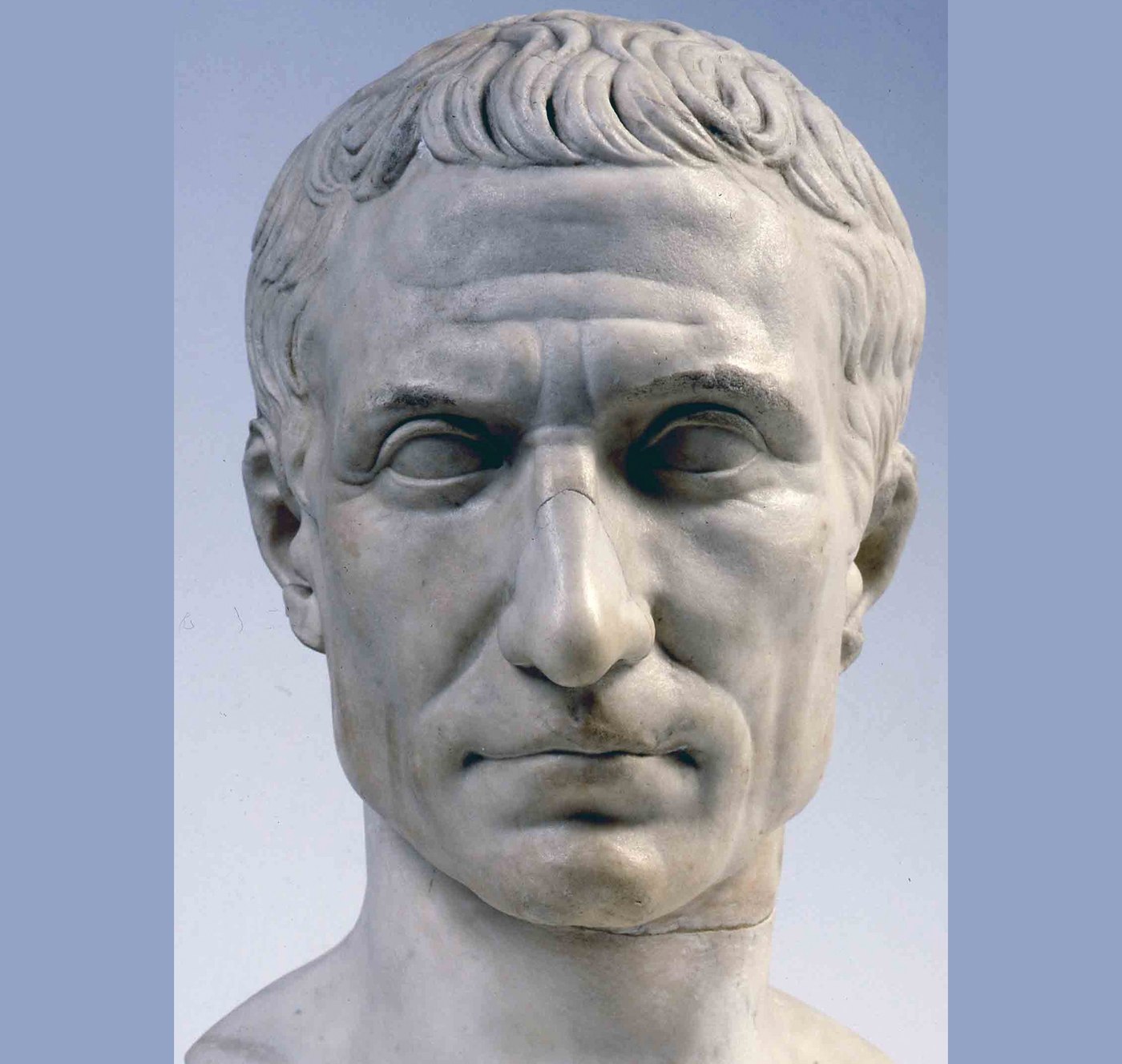
Portrait: Vatican Museums / Wikimedia Commons. Public domain. One of only two portraits of Caesar generally accepted as ancient. Cropped and resized for display.