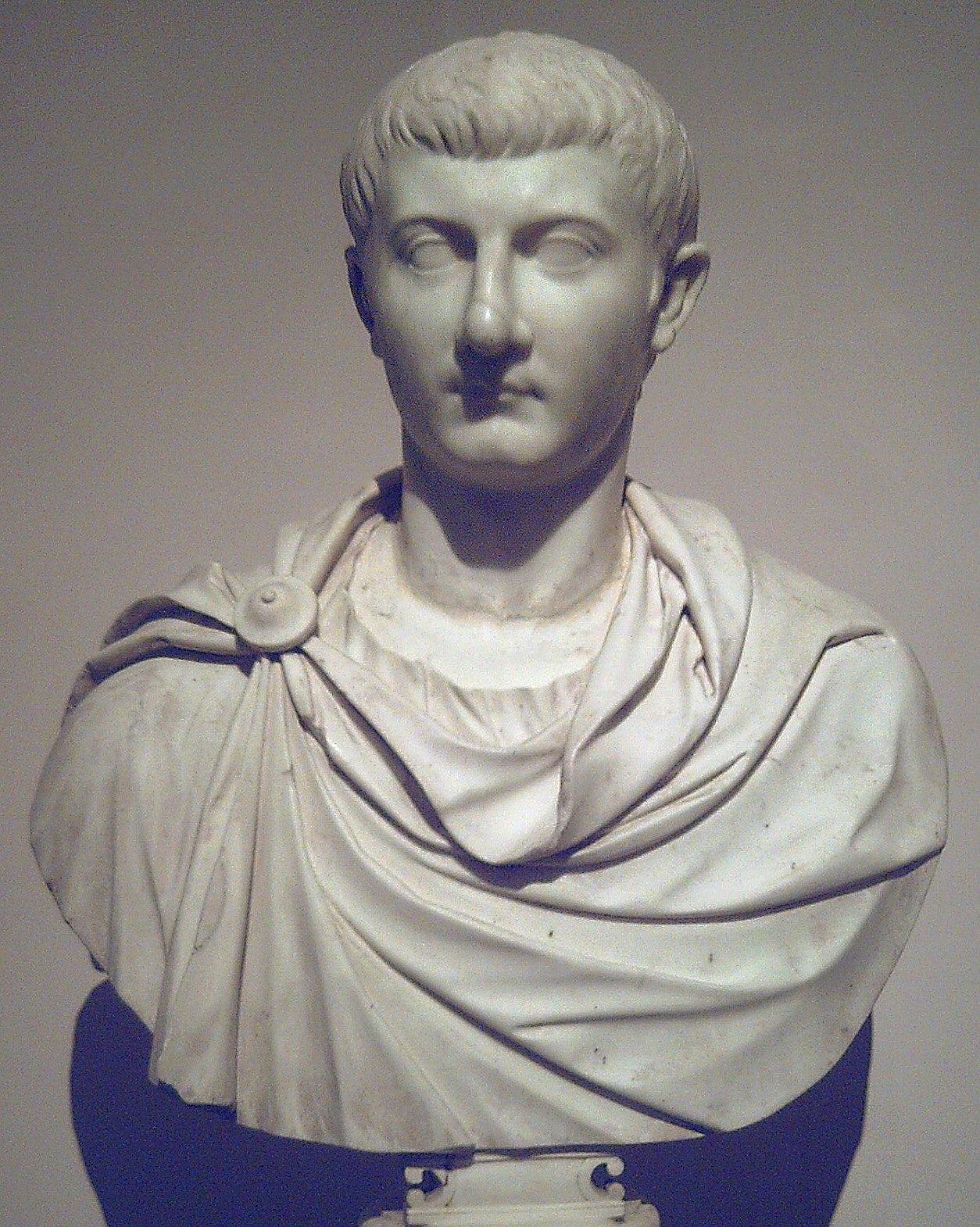
The biological son standing beside an adopted heir
Drusus Julius Caesar was the only son of Tiberius and his first wife, Vipsania Agrippina — a marriage Tiberius was later forced to end for dynastic reasons. When Augustus died in 14 CE, Drusus was sent to suppress a dangerous mutiny among the Pannonian legions, a mirror to his adopted cousin Germanicus’s handling of the Rhine mutiny the same year; the two young men’s careers ran in parallel for most of the next decade, one the emperor’s biological son, the other his adopted heir.
Sole heir, and a household with rivals
Germanicus’s death in 19 CE removed the one relative whose claim on the succession matched Drusus’s own, leaving Drusus as Tiberius’s clear heir. Drusus had married his cousin Livilla, Germanicus’s sister; their children included twin sons, Tiberius Gemellus and Germanicus Gemellus. Ancient writers describe Drusus as capable but quick-tempered, including a reported physical altercation with the rising praetorian prefect Sejanus.
A poisoning revealed years later
Drusus died in 23 CE; at the time, his death was attributed to illness. Years later, during Sejanus’s fall from power in 31 CE, it emerged — according to Tacitus — that Livilla and Sejanus, who had become lovers, had poisoned Drusus between them, removing the heir who stood between Sejanus and greater influence over the succession. The revelation, true or not in every particular, further poisoned Tiberius’s trust in those around him during his final years.
Historical sources
Tacitus, Annals 3.1–9; 4.3–11
Drusus’s public career and the later revelation of his poisoning.
Suetonius, Tiberius 25; 62
The Pannonian mutiny and Tiberius’s reaction to his son’s death.
Portrait: Luis García / Wikimedia Commons, CC BY-SA 2.0. Resized for display.