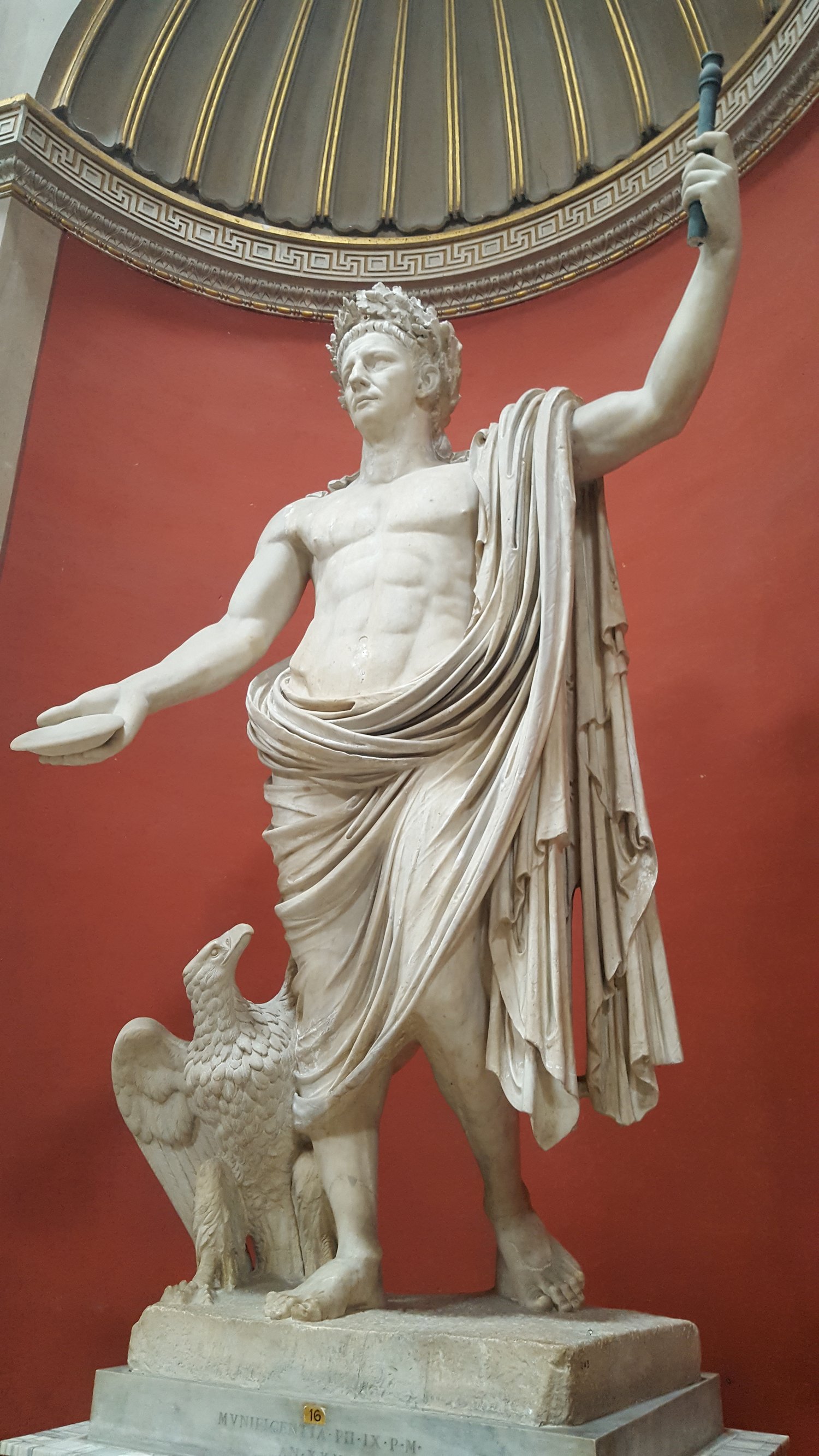
The relative nobody groomed for power
Claudius was born in Lugdunum (modern Lyon) in 10 BCE, the younger son of Drusus the Elder and Antonia Minor, and so a grandson of Livia and a nephew of Tiberius. A limp, tremor, and stammer — probably the aftermath of illness rather than any single condition — led his own family to keep him from public office and military command for most of his life. Ancient writers preserve unkind remarks about him from relatives, including his mother; historians now generally judge that his family underestimated him, and that his exclusion from politics may also have kept him at a useful distance from the purges that killed so many of his relatives under Tiberius and Caligula.
An emperor made by accident
After conspirators assassinated his nephew Caligula in 41 CE, palace guardsmen reportedly found the fifty-year-old Claudius hiding behind a curtain, fearing he would be killed as a witness, and instead acclaimed him emperor — the first Julio-Claudian raised by the army rather than by adoption or open succession. The Senate, presented with a fait accompli, ratified the choice. It was an unglamorous route to power, but it made him the dynasty’s most experienced administrator to date.
Conquest and a fatal marriage
Claudius used his reign to build the public authority his youth had denied him, most visibly by launching the invasion of Britain in 43 CE and later celebrating a triumph for it. At home, after executing his third wife Messalina in 48 CE, he married his niece Agrippina the Younger and adopted her son Nero, who gained precedence over his own biological son Britannicus. Claudius died in 54 CE; ancient authors report poisoning, often involving mushrooms, but the precise circumstances remain uncertain. Nero, his adopted son, succeeded him as emperor.
Historical sources
Suetonius, Claudius 3–4; 10; 17; 26–27; 44
His youth and reputation, the accession, Britain, marriages, and the disputed account of his death.
The Metropolitan Museum of Art, The Julio-Claudian Dynasty
Modern overview of Claudius’s reign and succession.
Portrait: Jamie Heath / Wikimedia Commons, CC BY-SA 2.0. Resized for display.