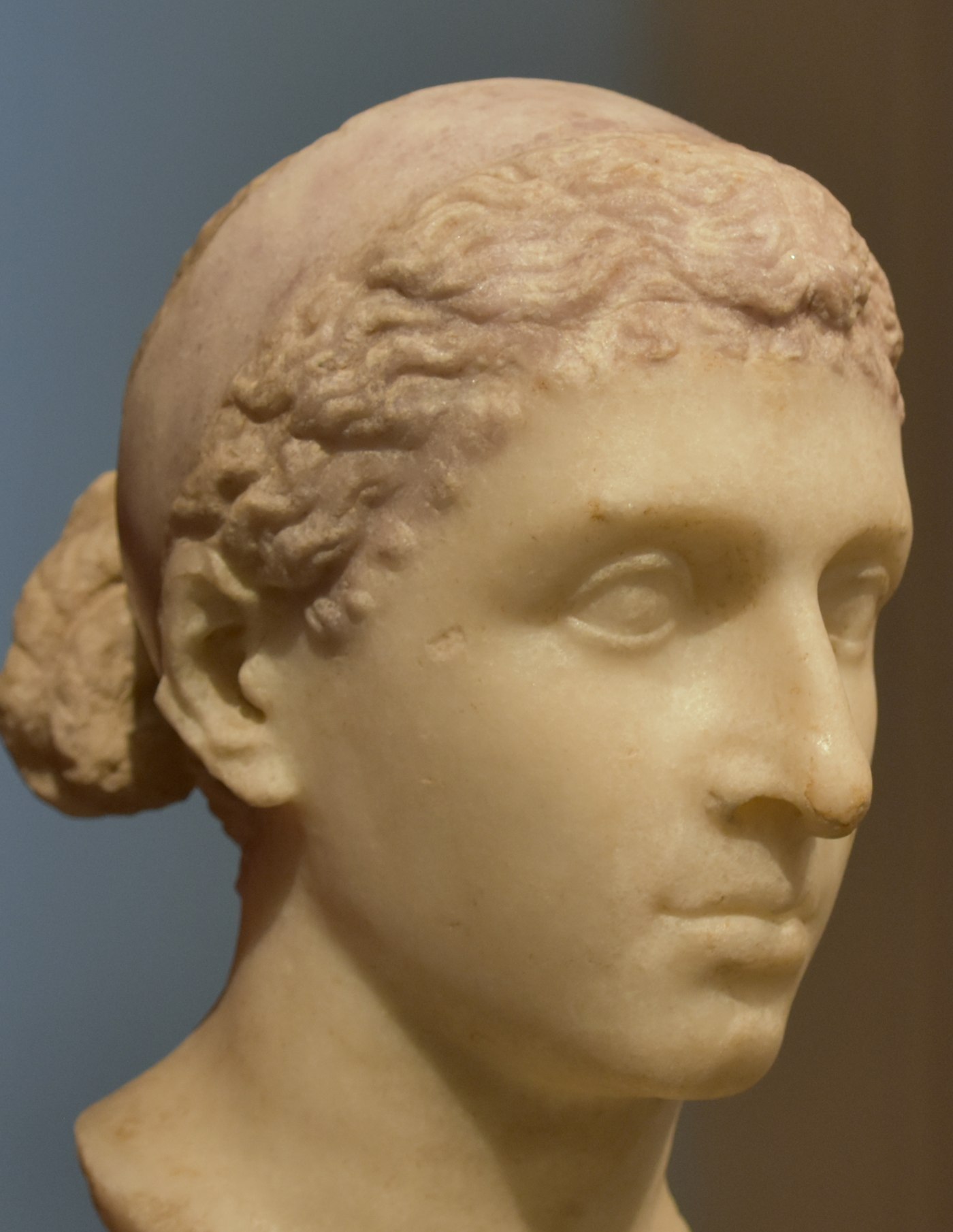
Queen in an age of Roman expansion
Cleopatra VII became queen in 51 BCE and fought a dynastic struggle with her brother Ptolemy XIII. Julius Caesar’s intervention restored her position. She later allied herself with Marcus Antonius, combining personal partnership, dynastic ambition, and the defence of Egypt’s political independence.
Actium and the end of the Ptolemies
Octavian defeated Marcus Antonius and Cleopatra at Actium in 31 BCE and captured Alexandria the following year. Marcus Antonius and Cleopatra died in 30 BCE. Egypt became a Roman province, Caesarion was killed, and their surviving children were taken into Octavia Minor’s household in Rome.
Historical sources
Plutarch, Life of Antony 25–87
The alliance with Marcus Antonius, the Donations of Alexandria, Actium, and the deaths of Marcus Antonius and Cleopatra.
Cassius Dio, Roman History 49–51
The eastern settlements, the final war, and the conquest of Egypt.
Portrait: Richard Mortel / Wikimedia Commons, CC BY 2.0. Carved in Cleopatra's own lifetime. Cropped and resized for display.